

AWARDS & RECOGNITION
Of Cod and Rum spent roughly two to three years in development before filming: the Canadian portion was shot in Newfoundland in August 2018, with the Jamaican segment following in spring 2019. Scarlett has said she was driven to make the film because she was “tired of seeing the same stories,” and wanted to bring forward “untold stories that have their roots in history and culture.” No festival awards are publicly listed for the film to date.
More information is available via ofcodandrum.com and IMDb.
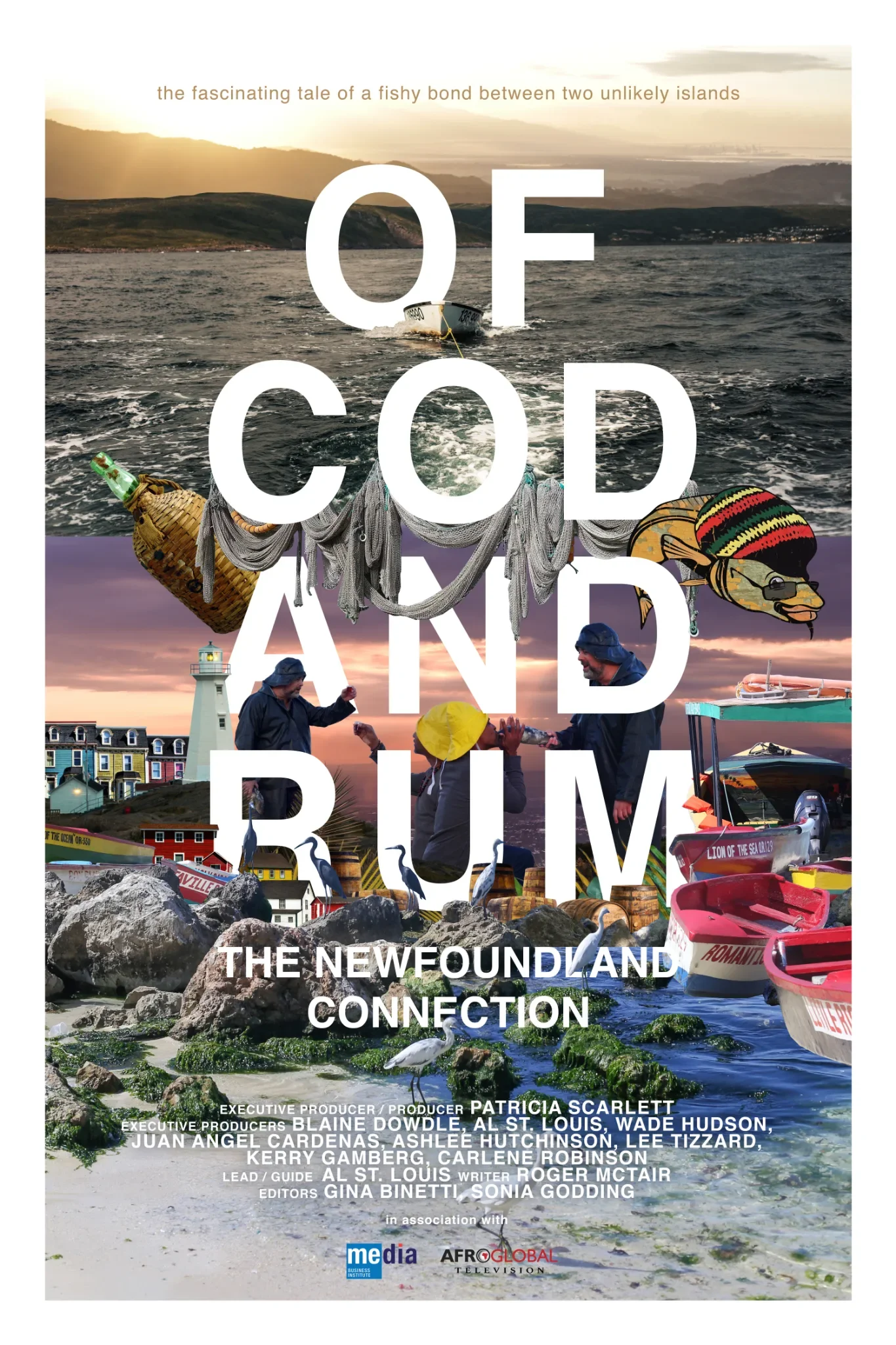
Of Cod and Rum: The Newfoundland Connection (2019)
Director: Wade Hudson, Patricia Scarlett
FILM SYNOPSIS
The documentary explores the historical and cultural links between Newfoundland - affectionately nicknamed “The Rock” - and Jamaica, known as “Jamrock,” tracing a trade relationship built on salted cod shipped from Newfoundland to the Caribbean and rum sent back in return. Canadian spoken-word artist Al St. Louis serves as the film's guide, traveling to both islands to uncover shared history, including taking part in a traditional Newfoundland “screeching-in” ceremony. Along the way, the film draws on interviews with historians, fishermen, business owners, and distillers to trace how salt fish came to be paired with ackee and other staples of Jamaican cuisine, and to reveal the deeper colonial-era ties binding the two islands together.

DIRECTOR’S VISION
Of Cod and Rum: The Newfoundland Connection marks the directorial debut of Wade Hudson and Patricia Scarlett, who share Jamaican heritage but arrived at filmmaking from different paths. Hudson, born and raised in Jamaica before settling in Toronto, is an award-winning stills photographer known for his portraiture and his focus on capturing the human face. Scarlett, who was raised in Montreal and later put down roots in Newfoundland, is an experienced documentary filmmaker whose work examines race, class, and culture; her time researching Newfoundland's cod fisheries and their historic trade ties to the Caribbean helped seed the project. Together, the pair set out to bring both visual and critical depth to a story neither had seen told before.
DIRECTORS’ STATEMENT
In their directors' statement, Hudson and Scarlett describe uniting their shared Jamaican heritage with their individually “diverse experiences to craft a narrative that transcends borders and cultures.” They note that Hudson's eye as a portrait photographer and Scarlett's grounding in documentary storytelling around race, class, and culture combine to look “beyond the surface to unearth the untold stories and shared histories” connecting the two islands. Calling the film their directorial debut, they frame it as an invitation for audiences to “embark on a journey of discovery, traversing landscapes both physical and emotional,” with the aim of provoking thought, evoking empathy, and fostering “a deeper understanding of the interconnectedness of our world.”
PRODUCERS’ STATEMENT
Producers Patricia Scarlett and Diane De La Haye describe their mission as illuminating “the multifaceted history and cultural intersections of Jamaica with the wider world,” acknowledging the complex legacies of colonization that tie the island to Africa, Europe, and Asia. While recognizing Jamaica's persistent social challenges, they say their focus is intentionally on “positive and little-explored stories that showcase the beauty, resilience, and cultural richness of Jamaica.” They point to Jamaica's nickname “Jamrock” and Newfoundland's own moniker, “The Rock,” as the spark for the documentary, which they position as a vessel for revealing “how the flavors, traditions, and histories of Jamaica and Newfoundland intertwine” - from the story of how saltfish “got married” to ackee, to the broader shared heritage linking the two islands.